

Economic Survey-2026 emphasises ‘persistent rather than episodic’ reforms
image for illustrative purpose
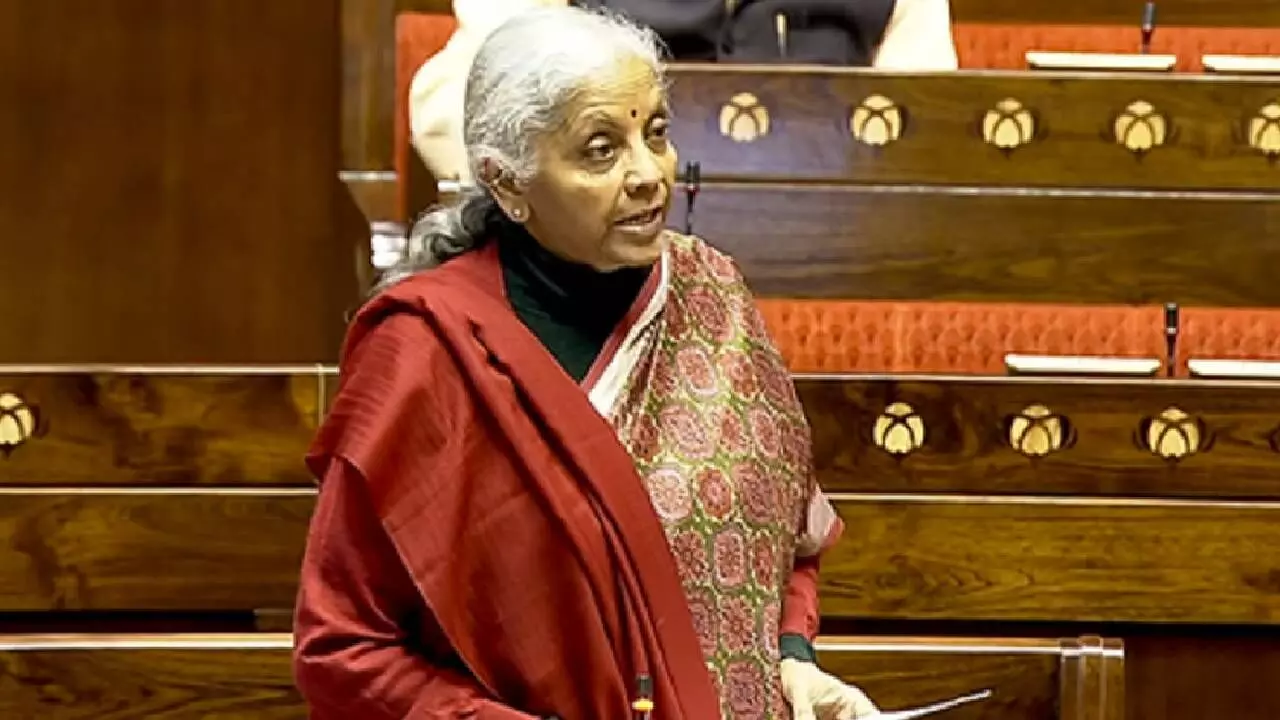
New Delhi: Just before Finance Minister Nirmala Sitharaman tabled Economic Survey 2026 in Parliament, Prime Minister Narendra Modi set the tone of not just the review of the economy that the Survey presents but also Budget 2026-27 three days later. “Reform, perform, and transform has become the identity of this government,” he said. So, unsurprisingly, the leitmotif of the Survey was reforms.
Based on strong macroeconomic numbers and a series of regulatory reforms, the Survey has pegged the growth rate at 6.8-7.2 per cent in 2026-27. For the current fiscal, growth is projected at 7.4 per cent as per the first advance estimates released earlier this month, which is 1 per cent higher than that predicted in the Economic Survey 2025.This is higher than the IMFs projection of 6.4 per cent growth in 2026-27 and the World Bank’s 6.5 per cent for the same fiscal. Survey 2026 has also presented a strategic vision to negotiate the maze of the global economy which has been hit by US President Donald Trump’s tariffs.
Economic Surveys are prepared by a team headed by the Chief Economic Adviser. In the last few decades, CEAs have generally been pro-reforms, so the Surveys are seen as the wish-list of reformers. Because of the political compulsions, governments often disregard liberalising measures suggested by the CEA. This time, however, the PM himself talked about “the reforms express.” Therefore, the Survey talks about “the compounding effect of sustained reforms” and insists that they should be “persistent rather than episodic.”
Pointing out that the current fiscal is unusually challenging for the economy on the external front with heightened uncertainty in global trade and the imposition of steep, penal tariffs. “The government responded by using this crisis as an opportunity to push through key measures such as GST rationalisation, faster progress on deregulation, and further simplification of compliance requirements across sectors.”
It added that 2026-27 is expected to be a year of adjustment, as firms and households adapt to these changes, with domestic demand and investment gaining strength. “That said, it must be acknowledged that the external environment remains uncertain, which shapes the overall outlook.” The Survey has flagged the rapid rise of digital addiction and screen-related mental health challenges in India. It highlighted expensive intermediary networks in the insurance sector. “Despite the push for digital transformation, customer acquisition continues to depend heavily on expensive intermediary networks.” As a result, a significant portion of premiums is consumed by distribution overheads.
CEA, V. Anantha Nageswaran, also talked about the rise of digital addiction and screen-related mental health issues in India, particularly among children and adolescents. The Survey concludes by emphasising state capacity, which is not an administrative concern at the margin but “the foundation on which strategic resilience is built and the pathway through which strategic indispensability becomes possible.”





